
End-to-end builder
I connect data, models, APIs, and infrastructure into complete systems — not isolated notebooks.
Software Engineer focused on AI Systems Engineering and Machine Learning. I design, build, and deploy complete intelligent systems — from data pipelines and model training to REST APIs, containerization, and cloud-native infrastructure.
Registered in Colombia's National Professional Registry with a Professional Registration Certificate — Auxiliary.
No. 013619-0790255From data to product: complete systems, end to end
SQL · ETL/ELT · Data processing · Data pipelines
Machine Learning · Deep Learning · Computer Vision · LLM/RAG
Java · Spring Boot · REST APIs · Microservices · Integrations
Docker · AWS · Terraform · CI/CD · Deployment
Web applications · Frontend · UX · End-to-end integration
I’m a Software Engineer focused on Machine Learning, Deep Learning, Computer Vision and building digital solutions.
My trajectory evolved from software development, backend and infrastructure to Data Science, Machine Learning, Computer Vision and AI systems. Today I combine software engineering with artificial intelligence to build reproducible solutions — from data processing and model training to evaluation, integration and deployment.
My main line of research is computer vision applied to healthcare. My thesis studies breast-lesion classification on DCE-MRI images, comparing Deep Learning architectures and using patient-level evaluation and interpretability techniques.
In parallel, I build web applications, landing pages, corporate websites, APIs, automation systems and digital solutions for small and medium-sized businesses, adapting technology to the concrete needs of each business. I also build systems based on LLMs, RAG and intelligent agents.
My goal is to combine software engineering, applied AI and digital product development, working both on Machine Learning and Computer Vision projects and on web and automation solutions for companies and startups.
ML Engineering · Computer Vision · AI Systems · Web Development · APIs · Automation
Software Engineer focused on ML, Deep Learning and Computer Vision. I build end-to-end solutions integrating data, models, backend, APIs and infrastructure, with a strong interest in applied research and reproducible AI systems.
I connect data, models, APIs, and infrastructure into complete systems — not isolated notebooks.
Java/Spring Boot and Python/FastAPI to expose models as scalable services with modular architecture.
Healthcare AI with DCE-MRI, reproducible experiments, and engineering rigor in every pipeline.
Continuous learning through projects, technical content, cloud labs, and hands-on infrastructure work.
Professional experience and applied engineering work across software, data and artificial intelligence.
My work spans the full AI lifecycle — from experimentation to production deployment. Every project follows reproducible engineering practices with modular architecture.
Modular, layered designs separating data ingestion, model serving, API layers, and infrastructure concerns.
Containerized ML pipelines with Docker, orchestrated on Kubernetes, deployed to AWS cloud environments.
Structured project layouts (data/, src/, notebooks/) with version control, metrics tracking, and documented pipelines.
Backend services in Java/Spring Boot and Python/FastAPI to expose models as scalable, production-grade APIs.
Full stack profile: Java + Spring Boot backends and JavaScript/React frontends — REST APIs, business logic and component-based UI.
Select a stage to see the tools and projects behind it.
Real engineering work with reproducible structure, clear architecture, and production intent.
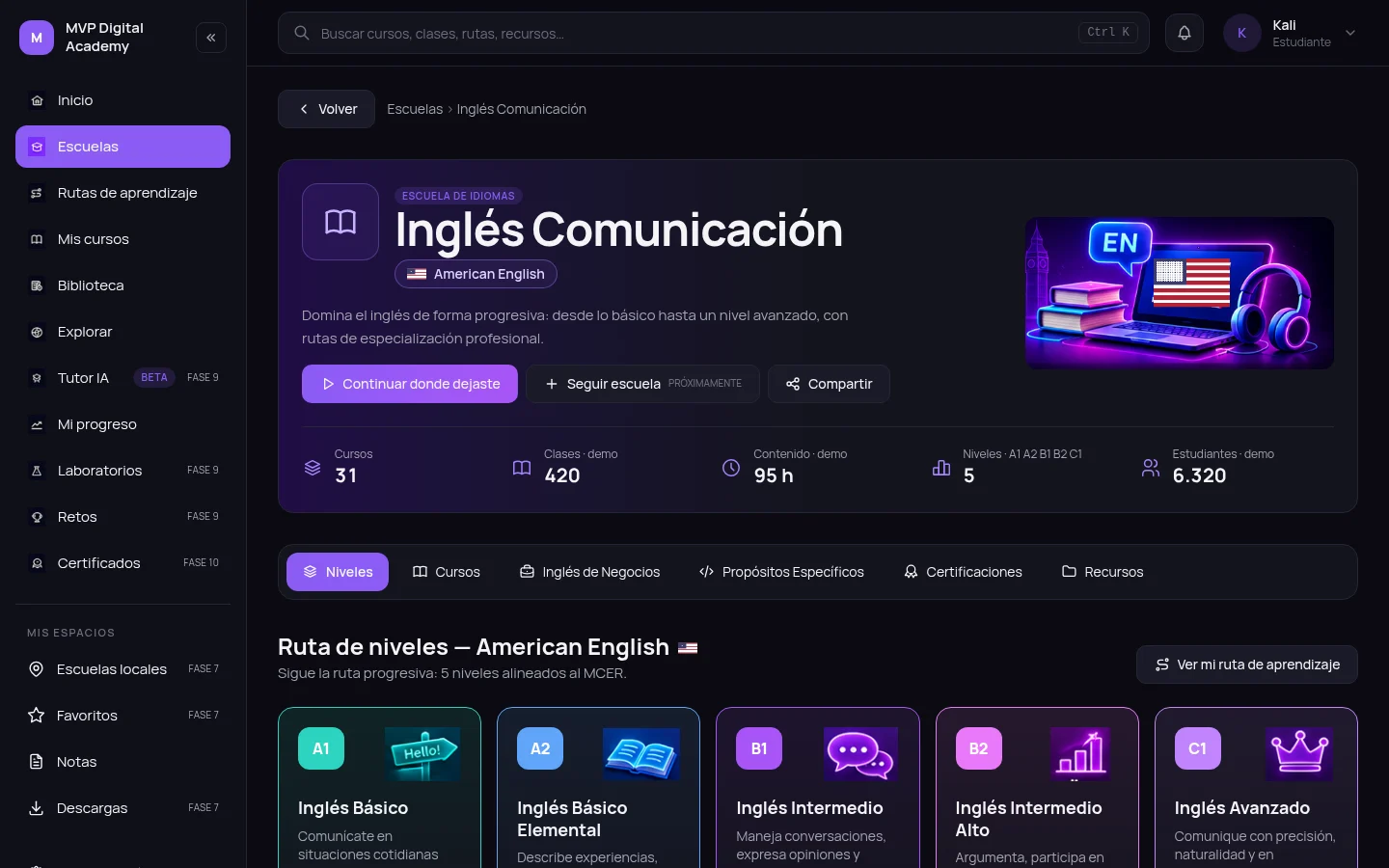
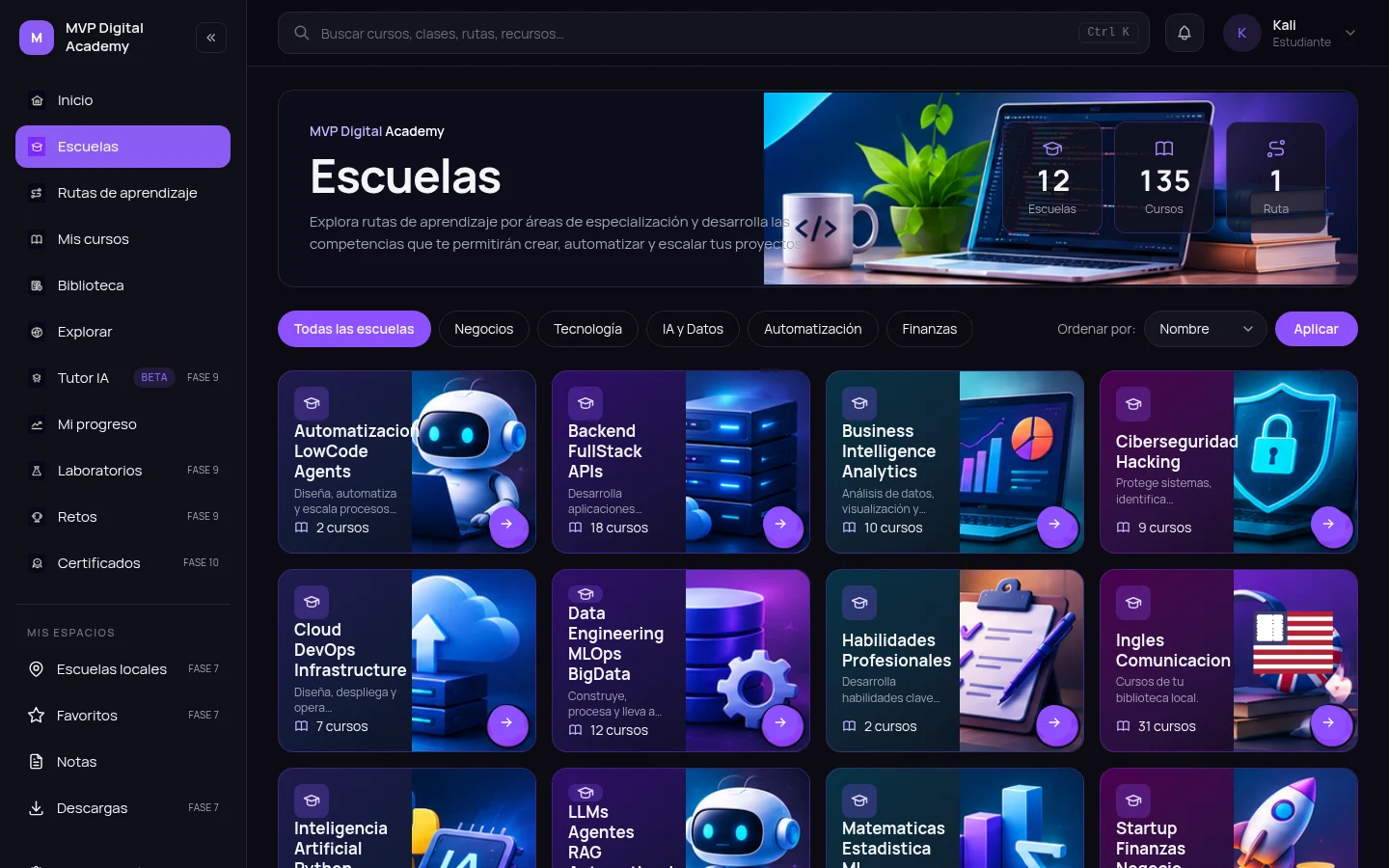
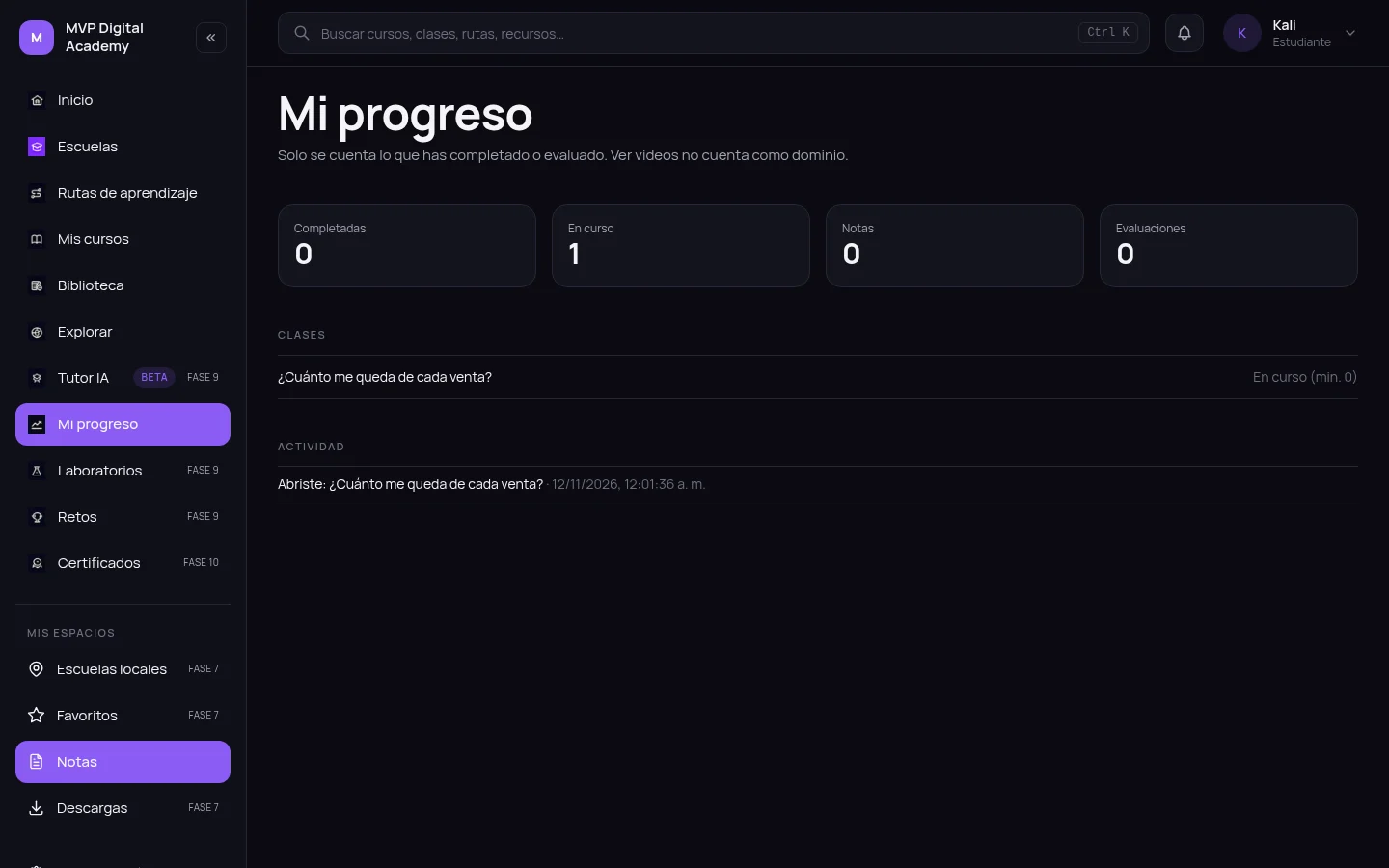
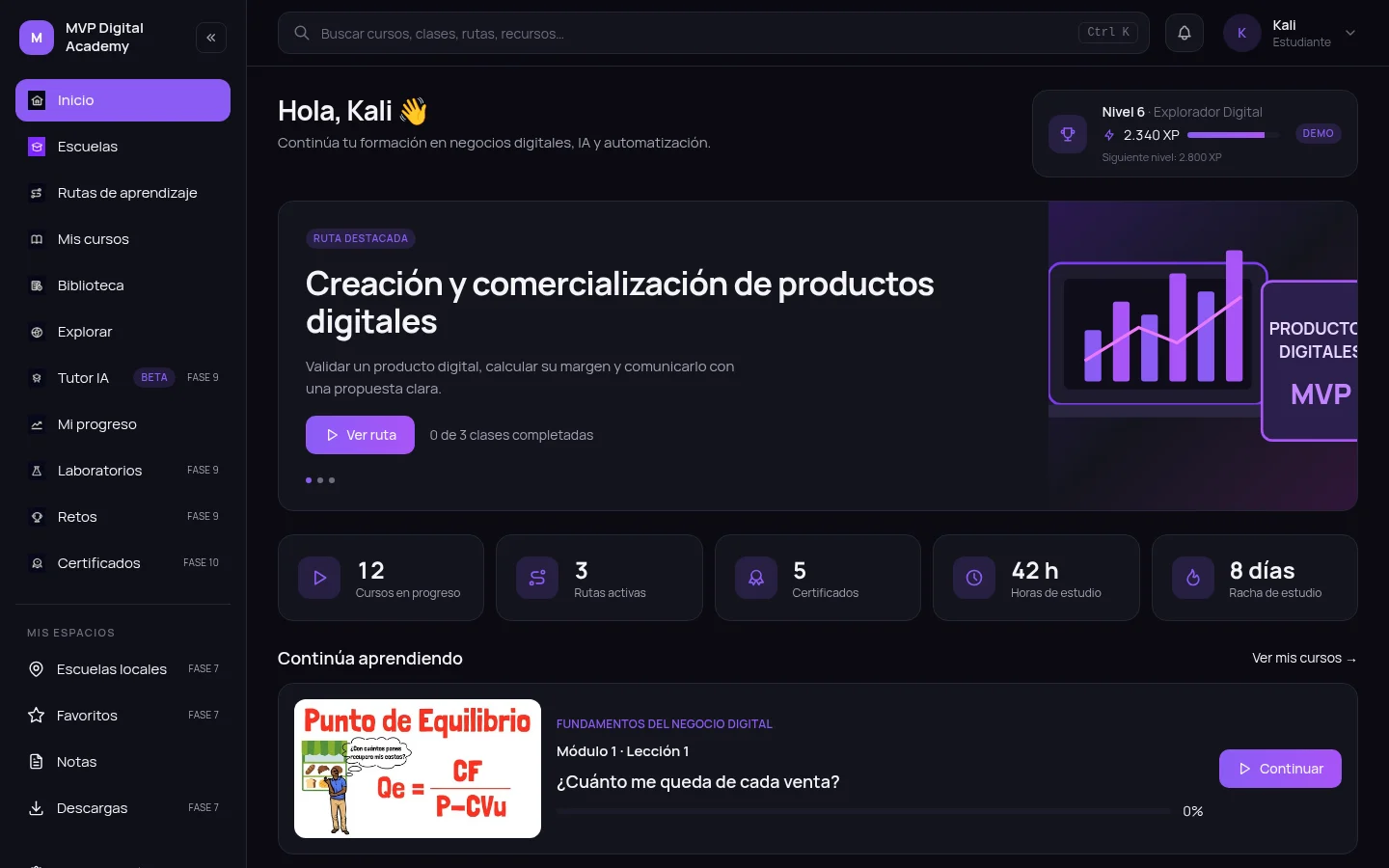
Personal learning platform with schools, routes and a local library of about 2,700 videos, with saved progress and automatic next lesson.
Swipe to see each screen · the recording shows navigation only, no lesson videos are played

Installable web app that turns PDFs, EPUBs, Word documents and even photos of book pages into an audiobook, and now also helps you learn English: it translates a word with a long press, reads in two languages and lets you practice your vocabulary as a game. The neural voices and the translator run on the phone itself, so documents never leave the device: no accounts, no servers and nothing to pay.
Your library, your narrator and your English tutor in one app. Open any book and a neural voice reads it to you; long-press a word and understand it instantly; save the new ones and learn them as a game. Everything happens on the phone: free, no ads, no accounts and no internet needed.
Swipe to see each feature · the videos have sound


Landing page for a renovation and professional-cleaning business in Madrid: bathrooms, tiling, flooring, doors, plumbing and electrical work, plus cleaning for residences, common areas and windows. Every contact goes to WhatsApp.

Online store built to order for Vella Perfumería in Colombia: a catalog of 103 designer and Arabic perfumes, each with its olfactory profile and its own description, filters by gender, brand, price and notes, and advice via WhatsApp. The full store (Next.js + Spring Boot) adds cart, online payments and an admin panel for products, orders, inventory and customers. The preview is already live.
Swipe to see the store on computer and phone


Personal AI assistant with a live dashboard: weather, Google Calendar, AI news and job offers filtered for ML/AI and Java Backend roles in Colombia, plus multi-LLM chat. Migrating to Spring Boot microservices.

Scientific-literature monitoring module inside JARVIS, built for my breast-cancer DCE-MRI thesis: its own Pinecone index — separate from JARVIS's general memory —, weekly scans across 4 real sources, relevance scoring and citation-hallucination checks.

Interview-prep module inside JARVIS: spaced-repetition question bank for 9 roles, deterministic mock interviews, and recruiter-perspective feedback plus STAR coaching after every answer. The same engine also powers a 68-question ICFES Saber Pro practice track, used locally only.

How JARVIS grows: each capability is built on its own branch, with tests and an ADR, and reaches main only after review. 383 commits and 55 architecture decisions so far.
feat/langgraph-mcp — agents rebuilt in layers with LangChain/LangGraph and an MCP server exposing JARVIS toolsfeat/preparacion-entrevistas + feat/noche-2026-10-06 — interview prep: FSRS bank for 9 roles, interviewer mode, SQL lab with test cases, technical Englishfeat/simulacros-abcd — scored A–D mock tests that renew when completed; light/dark themes and custom accent colorfeat/academia-estudio — Academy: 5 tracks (Python, Java, SQL, DSA, design patterns), 90 topics with exercises run in a Python/Java sandbox, diagnostic test, exam and daily planfeat/research-pdf-download — the research library downloads open-access PDFsrefactor/jarvis-pendiente — one shared tool-execution layer for every agent (ADR-055)depuracion + seguridad — 17 bugs fixed, sandbox limits with prlimit, no API key in the browser (Supabase JWT only), dependency CVEs patcheddocs/manual-codigo — code manual plus docstrings and JSDoc across backend and frontendDeep learning for benign vs. malignant breast-lesion classification on DCE-MRI. Approved in Sep 2026; now being turned into a scientific article.

RAG system covering the five official modules of Colombia’s Saber Pro exam, with a learning engine on top. Documented with ADRs.
AI diploma project at Universidad de Antioquia that I led: 10 supervised classifiers on the Breast Cancer Wisconsin Diagnostic dataset, held to a clinical standard of recall ≥ 0.90 for malignant tumors.
Image classification system using Convolutional Neural Networks. Multi-architecture evaluation with overfitting analysis, generalization metrics, and real-project folder structure.
A growing registry of architectures — from classic feed-forward networks to graph learning — each with its own status, honestly reported. Nothing here is marked trained or deployed unless a real artifact backs it.
Building scalable data and ML systems on cloud platforms with distributed processing, container orchestration, and managed services.
Cloud deployment patterns for ML services, storage and compute on AWS, with infrastructure as code in Terraform.
Distributed data processing for large-scale ETL pipelines and feature engineering at scale.
Docker-based ML pipeline packaging with reproducible environments and CI/CD readiness.
Container orchestration for scalable model serving, auto-scaling, and production workloads.
Relational and structured data management with PostgreSQL for ML feature stores and application data.
Experiment tracking and model registry with MLflow, pipelines on Databricks, version control and deployment automation.
A progressive path from software development foundations to AI systems engineering.
All of my education has been funded by scholarships earned through good academic performance — every program in this section, through Sapiencia, Participatory Budget (PP), Matrícula Cero, Nodo with Accenture and Estud-IA.
Data Science and Machine Learning are part of the university curriculum — not only external courses.
Institución Universitaria Pascual Bravo
Continuation via propaedeutic cycle from Software Development Technology. 177 academic credits completed across Software Development Technology and Software Engineering. Focus: backend, software engineering, ML, intelligent systems, architecture.
Nodo + Accenture
Currently enrolled (36 h). Workflow automation with n8n, Zapier and Make; OpenAI, Claude and Gemini integrations with prompt chaining and API cost control; chatbots with Redis conversational memory and RAG over Pinecone; REST APIs with OAuth2, rate limiting, retries and pagination.
Nodo + Accenture scholarship
AI and automation applied to digital transformation: process analysis and identification of automation opportunities.
Universidad de Antioquia + Talento Tech
Deep Learning, CNNs, Computer Vision, image classification, ML benchmarking.
ESUMER
3rd place · Advanced Cloud Architecture Hackathon (Terraform + AWS)
AWS, cloud computing, deployment, cloud-native infrastructure.
Universidad Pontificia Bolivariana
Web programming training, part of the web-developer profile.
ESAP
Data Science training covering Python, Jupyter Notebooks, mathematical and statistical foundations, together with data manipulation, analysis and exploration techniques. The program includes database fundamentals, an introduction to Machine Learning, and data visualization, providing a foundation for structured data work and the application of computational methods to analysis and decision-making.
Institución Universitaria Pascual Bravo
Backend, C#, SQL Server, MATLAB neural networks, IoT, network security, Scrum.
Servicio Nacional de Aprendizaje (SENA)
First training in systems: computer equipment maintenance and technical support — the starting point of the path.
Intermediate technical English, strengthened every day through documentation, technical content and hands-on engineering work.
Engineering with large language models — intelligent pipelines, retrieval systems, and multi-agent automation.
GPT-4, Claude, Gemini, DeepSeek via OpenRouter.
LangChain, vector retrieval, context-aware pipelines.
Workflow automation and multi-step reasoning.
Ollama for local experimentation.
# LLM orchestration pipeline
agent = CareerOpsAgent(llm="claude", retriever=RAG())
pipeline.run(task="score_ml_roles", context=jobs)
# → structured output · auditable · reproducibleActive research directions at the intersection of AI, systems engineering, and production deployment.
Medical imaging, DCE-MRI analysis, and clinical ML pipelines.
Computer vision for diagnostic support and temporal MRI.
Scalable systems for serving and deploying ML in production.
Reproducible pipelines, versioning, and CI/CD for ML.
RAG, LLM orchestration, and retrieval at scale.
Autonomous agents and intelligent task orchestration.
CNNs and advanced neural architecture evaluation.
AWS-native AI and distributed data processing.
Image classification and architecture benchmarking.
Backend, business logic and web application architecture.
Expected graduation — December 2026.
JARVIS (personal AI assistant) and SaberPro-RAG. Independent / freelance work.
Currently enrolled (36 h): workflow automation with n8n, Zapier and Make, LLM integrations, chatbots and REST APIs.
Turning the approved thesis into a scientific article for publication, mentored by Dr. Rubén Darío Fonnegra Tarazona — Coordinator of the Specialization in Big Data; Electronic Engineer, MSc in Industrial Automation and Control and PhD in Engineering — who recommended continuing the thesis as an article.
Completed, approved and evaluated in September 2026. Final ResNet50 model on 35 test patients: ROC-AUC 0.941, sensitivity 0.864 and specificity 0.846.
Nodo + Accenture scholarship — AI and automation applied to digital transformation.
Deep learning, CNNs, computer vision, image classification and ML model benchmarking (280 h).
Predictive models to classify breast tumours on the Breast Cancer Wisconsin Diagnostic dataset: logistic regression, decision trees, Random Forest, SVM and KNN with cross-validation.
Breast-lesion classification on DCE-MRI with ResNet50, EfficientNet-B3 and MobileViT-S (PyTorch), 5-fold cross-validation, patient-level evaluation and Grad-CAM.
Institutional web platforms, WordPress and Moodle administration, responsive design and support for digital-transformation initiatives.
Propaedeutic cycle from the Technology degree: software architecture, testing and quality, mathematics, data science and machine learning.
Third place in the hackathon of the Cloud Architecture Diploma, building cloud infrastructure on AWS with Terraform.
AWS, cloud computing, architecture, deployment and cloud infrastructure (232 h).
Java backend for institutional and public-sector clients: REST and SOAP APIs, MSSQL, Oracle and MongoDB, legacy-system maintenance.
Web programming training, part of the web-developer profile.
Data analysis, statistics, machine-learning fundamentals and visualization with Python (380 h).
Technical foundation: backend, C#, SQL Server, web, neural networks in MATLAB, IoT, network security and Scrum.
Full development cycle of a mobile app, corporate website and automated testing with Selenium in a Scrum team.
Technical training begins: programming, algorithms, data structures, databases and mathematics.
Daily technical support for 100+ internal users: hardware and software incidents, operating-system installation and backups — while starting systems studies.
Servicio Nacional de Aprendizaje (SENA). First training in systems: computer equipment maintenance and technical support — the starting point of the path.
Open to AI/ML Software Engineer, Backend Developer (Java/Spring Boot) and Full Stack Developer roles — building intelligent systems that scale in production.